
Road to somewhere – Government announces 4 Step plan out of lockdown
As the Government announced their new four-step plan to bring to an end the restrictions needed to minimise the impact of COVID on the nation’s population; many could be forgiven for thinking ‘This is it! We’re out of lockdown!’.
But that’s not quite the full picture.
With every step taken, the Government is trying to ensure that we have the mechanisms in place to be able to move both forward and back if needed. Should the number of confirmed infections rise as we reach each of the four milestones, then the government has been very clear that we are likely to revert any steps already taken to get the numbers back on track.
So what are the key dates and rules?
In order for the easing of restrictions, key dates will prompt further easing of lockdown but only if the data that will be collated during each of the five week periods (between Steps) show that numbers of infections and fatalities are either not increasing or (as is hoped) continue to fall.
The four conditions for easing lockdown are:

Key dates and changes:


So how does that affect Inventory providers?
As you can see from the steps; effectively nothing really changes in regards to how reports and property visits are currently conducted until the 17th May when restrictions to social contact are relaxed allowing the ‘Rule of 6’ within a property.
That does not mean, however, that your own protocols should change at that point. Until you have reviewed your process, consulted with your clients and clerks to ensure that safety is maintained throughout any property visit, your current safety protocols should continue to be adhered to.
Wear PPE – wear a mask, gloves or ensure hand sanitizer is used both before and after visiting the property.
Keep a safe distance – until the government makes any changes to their guidance a 2 metre distance should be maintained when at the property from anyone else present.
Wash hands – washing hands regularly and for at least 20 secs both before and after visiting the property where possible.
For more detailed safety at the property guidance; view our blog – Inventory Clerk Guidance For Safe Property Reports – 3.0
What should inventory providers do before March 8th?
In order to be ready for each and every step both forward and backwards, if the data suggests that the government’s plan for easing of lockdown is not working, so you should be reviewing your protocols and plans to deliver your service.
- Review current working practices, safety protocols and advice both for your clerks, clients and subcontractors you use
- Align your protocols with the 4 Step plan so that you can easily move between steps as restrictions are eased or are reintroduced
- Communicate your plan with your clients, staff, clerks and any additional support you use to provide your services
- Keep lines of communication open so that should the situation change you can quickly adapt and ensure that your services are not affected
We have provided a handy template to help you review your protocols:
As providers we need to ensure that our staff, clerks and clients feel safe and supported during the transitions between each of the steps.
As the housing industry has been able to operate during the pandemic the transition in some respects will be less of a disruption as we can continue to compile reports and make property visits, however be under no illusion; it will still be a difficult transition out of lockdown.
The psychological challenges that some may face will be less obvious and there will no doubt be pressure to relax current working practices as agents and landlords seek to get the industry back to something resembling ‘normal’. But that does not mean that safety should be put at risk, so a considered approach as to how you will deliver services going forward should be your priority.
The steps the government has issued to ease the restrictions, get the economy moving and to allow people to be together as families and friends is now a road to somewhere but remember; only when the government is sure that it is safe to move from one step to the next will decisions be made to move forward. Adopting this approach to your own inventory services will help ensure that we protect our staff, clients and the wider public.
An accompanying podcast to this blog is available – listen to ‘The Inventory Professional’ on Apple, Spotify or YouTube.
Inventory Clerk Guidance For Safe Property Reports – 3.0
We are now in yet another national lockdown. This will be the third event where restrictions have been implemented however despite the entire globe battling the COVID pandemic; property reports still need to be carried out.
Although the housing industry is permitted to work, it does not mean that we can let our guard down. We are all aware of the need to follow guidance in being safe, washing our hands, adhering to social distancing and wearing masks. However, we would urge you to read the up to date guidance which can be found by visiting the relevant Government website for your part of the country.
- National lockdown in England
- Restrictions in Scotland
- Restrictions in Wales
- Restrictions in Northern Ireland
Government guidance for working in people’s homes and for professionals in the housing industry who are unable to work from home is still in place. It’s important that you familiarise yourself and ensure that you have sufficient understanding, as well as the right protocols in place to keep yourself, your colleagues, clients and the wider general public safe.
Although obvious; it is right to point out that if you or your clerks feel unwell you should not be booking appointments. If you have symptoms of COVID-19, however mild, or you have received a positive COVID-19 test result, you should immediately self-isolate at home for at least 10 full days from when your symptoms started.
The following checklist seeks to assist inventory providers to stay alert and safe when undertaking property visits and inspections.

Booking the property report
- Have you asked if anyone is self isolating, shielding or are displaying any symptoms of COVID-19?
- Has the property been unoccupied for more than 72 hours?
- Has the property been suitably prepared for the visit to be conducted – including sanitising of handles/ surfaces that you may need to touch during the inspection?
- Have all doors and windows been opened (without compromising security) for easy access and ventilation?
- Has safe collection/return of keys/access/remotes been arranged?
- Is there anything else you need to know to ensure your safety?
If appointments are being pre-booked for later in the month or proceeding months, then refer to the checklist a few days beforehand to ensure that all the necessary precautions have been taken and that any new cases or symptoms of COVID have been advised.

At the property
- Ensure you have disposable gloves, shoe covers and a face mask available before each and every appointment
- Where possible; wash hands before you enter the property and or regularly for no less than 20 continuous seconds
- Do not touch your face, eyes, nose or mouth during/directly after the visit/inspection without washing/sanitising first
- Use hand sanitiser before you enter the property
- Maintain a 2-metre distance to any persons present at the property
- Keep contact with surfaces to a minimum whilst at the property
- Do not risk your safety by removing any appropriate PPE during the appointment
Where possible; allow sufficient breaks between appointments for you/your clerks to be able to wash your hands, take comfort breaks and have time to eat/drink. If you are tired and or rushed you may let your guard down and compromise your safety.

After the visit
- Remove your gloves and or use hand sanitiser as you leave the property and before you touch your vehicle/mode of transport
- Wipe down equipment including phones, battery packs, keys before touching any other surfaces before and after each and every visit
- Dispose of any used masks and gloves in a suitable bag or container. Add to your general waste after 72 hours only
- Wash re-useable face masks regularly and as recommended by the manufacturer
- Sanitise keys/access/remotes before returning them to the landlord/agent or tenant if conducting a check in appointment
- Wash your hands as soon as it is practically possible
Remain vigilant between appointments so that you minimise any routes of transmission back to your home, the next property, agents offices or clients premises.
In order for the housing market to continue to operate we must all play our part in minimising the risk of contracting or transmitting COVID-19.
Above all else; stay safe 💛

Please ensure you visit our Covid content hub for all of the latest support, guidance and advice.
Lockdown 2.0 – how InventoryBase are supporting customers and the lettings industry
The new lockdown announcement on Saturday that further restrictions are being brought in wasn’t exactly unexpected as COVID cases continue to rise. The new set of national restrictions that come into effect on Thursday 5th November will now add even more pressure to both the economy, businesses as well as on a personal level.
And although it appears that the guidelines for the housing industry are somewhat similar to those imposed in March, they are changing almost hourly – so InventoryBase will continue to provide updates and guidance as soon as it becomes available.
So what do we know right now?
Housing Secretary Robert Jenrick has said on Twitter that: “The housing market will remain open throughout this period, but everyone should continue to play their part in reducing the spread of the virus by following the current guidance.”
For further guidance and a breakdown of the businesses that are to close during the 4 week lockdown visit Gov.uk – New National Restrictions from 5th November
So that everyone can play their part in containing the virus, the Government is advising that everyone who can work from home must do so. However, working from home is just not possible for inventory providers and the wider supplier chain as most if not all our work involves being in and around properties.
To be able to continue working safely and carry out our role of providing quality and robust property reports, COVID-secure guidelines must be followed closely with extra considerations given to those people at higher risk.
Preventative measures you should take include:
- hand washing regularly for 20 seconds (use sanitiser if out in the field)
- cleaning any surfaces you have touched
- spending as little time in the property that is practically possible
- reduce the number of people each person you have contact with by planning ahead for reports including picking up of keys
- checking whether anyone at the property (if occupied) is isolating and or have been advised to shield
- encouraging agents/landlords to adopt a 72 hour ‘barrier’ between checkout and carrying out the physical report
- communicating with all key stakeholders to minimise risks
- maintain social distances of 2m or 1m where you need to be in the same room as a colleague or other contractor
- Remember: wash your hands – cover your face – make space
Communication remains key – talk to your clerks, contractors, clients and staff so that everyone is supported, they all understand their obligations and that if there is an indication of infection that all the required protocols are carried out including utilising the NHS Track and Trace app where appropriate.
So how can we help support you during these difficult times?
InventoryBase has a range of support measures to help inventory providers which include latest information and updates on the crisis via our content hub.
We have extended the free use of our self inspections service until March 2021 – more details to follow, but you can find all the current user guidance and information by viewing our blog.
We’re also developing a cutting edge new feature which will make remote inspections even more effortless. Watch this space for more info!
InventoryBase Workstreams
With agents likely to utilise the extended furlough scheme to manage staff, it’s inevitable that some may require additional help with their reports and inspections during this second lockdown period.
InventoryBase Workstreams have a network of approved and vetted suppliers so that agents, landlords and providers looking to outsource can access reports on demand.
InventoryBase Academy
Our closed InventoryBase Academy Facebook Support Group has a large and growing number of nationally based inventory professionals who are actively supporting each other as we navigate through these turbulent times. The free-to-join group is specifically geared to clerks who are both new to the industry as well as seasoned professionals as we all need a bit of help sometimes.
And to keep you busy and up to date with all the latest training and guidance our InventoryBase Academy has a range of online free resources and CPD Accredited courses that include:
- Learn How To Produce Professional Property Reports
- Practical Property Reports
- Learn How To Dictate property Reports
- NSPCC Safeguarding Awareness
- Homes Fit For Human Habitation
- Legionella Risk Assessment
- GDPR For Inventory Professionals
Positive takeaways
Although clearly this is a worrying time for everyone on many levels and for inventory providers who are mostly self employed the restrictions add yet another layer of concern, there are positives to take from this situation.
The furlough scheme, which was set to end in November, has now been extended until the end of the national lockdown and mortgage payment holidays will be extended.
And remember:
- Lockdown is only set for 4 weeks
- Renters are still allowed to move
- Clerks can still enter homes (following COVID-Secure guidelines)
The information contained in this blog is subject to change as we understand more and should be viewed as a guide only. For more information, see gov.uk.
New COVID Restrictions – Keep Calm & Carry On
It is undoubtedly a worrying time for us all right now. The new covid restrictions and 3 tier process announced by the Government yesterday (in full rather than the drip, drip feed we have had over the past week or so) has put everything very much into perspective.
We are in the grip of a second wave; the curve of infection rates and increased R which, on Friday 18 September, the government said was estimated to be between 1.1 and 1.4, slightly up on the previous week all support the need for additional measures to combat the spread of infection.
The introduction of The Local COVID Alert Levels “medium”, “high” and “very high” – will be implemented in different areas depending on local infection rates which means we, as suppliers to the property industry, will need to keep on top of current advice, keep a keen eye for any changes and lockdowns and be even more vigilant when it comes to both our health and mental well being.
So let’s take a programmatic approach here (doom and gloom doesn’t help anyone) and look at what can and should be done to prevent the spread of the virus as well as keep our livelihoods.
Ensure that you heed Government advice to:
- Wash your hands
Coronavirus can survive for 24 hours or more in indoors environments. Washing your hands with soap and water for at least 20 seconds, or using hand sanitizer, regularly throughout the day will reduce the risk of catching or passing on the virus.
- Cover your face
Coronavirus is carried in the air by tiny respiratory droplets that carry the virus. Face coverings reduce the dispersion of these droplets. That means if you’re carrying the virus you’re less likely to spread it when you exhale.
- Make space
Transmission of the virus is most likely to happen within 2 metres, with risk increasing exponentially at shorter distances. Making space between yourself and others has a powerful impact in containing the spread of coronavirus.
If you or anyone you know ever displays symptoms of the virus, you can get a free test by calling 119 or visiting nhs.uk/coronavirus.

Beware of the levels for your local area and the areas you provide your services.
Tier 1 – Medium
- 10pm curfew for bars, pubs and restaurants
- Gatherings of more than six people banned, apart from some settings such as funerals and weddings
Tier 2 – High:
- Mixing of households indoors not allowed in any setting
- Two households can meet in a private garden – rule of six and social distancing rules apply
Tier 3 – Very high:
- No mixing of households indoors and outdoors, including in private gardens
- Pubs and bars to close
- Restaurants, and pubs that can operate as restaurants, allowed to stay open
- Local politicians will decide if gyms, betting shops, casinos, hairdressers and beauty salons should close
- Non-essential shops, schools and universities to remain open
- Avoid non-essential travel
- Travel outside area advised against
Further information and advice including up-to-date tier levels can be accessed by visiting Gov.uk
As inventory providers and industry suppliers, our core work is at and within a property so visiting any property other than your home carries a risk so it’s incumbent on us all to minimize the potential for transmission and reduce the risk to the lowest possible level.
Preventative measures you should take include:
- hand washing regularly for 20 seconds (use sanitiser if out in the field)
- cleaning any surfaces you have touched
- spending as little time in the property that is practically possible
- reduce the number of people each person you have contact with by planning ahead for reports including picking up of keys
- checking whether anyone at the property (if occupied) is isolating and or have been advised to shield
- encouraging agents/landlords to adopt a 72 hour ‘barrier’ between checkout and carrying out the physical report
- communicating with all key stakeholders to minimise risks
- maintain social distances of 2m or 1m where you need to be in the same room as a colleague or other contractor
Also; talk to your clerks, contractors, clients and staff so that everyone is supported, understand their obligations and that if there is an indication of infection that all the required protocols are carried out.
The Information Commissioner’s Office (ICO) has a wealth of advice and guidance for businesses in regards to how to communicate within GDPR rules including whether, if you become aware of someone who has tested positive for COVID-19, you need to report them to a contact tracing scheme.
The clear answer here is no. The ICO states that:
Contact tracing personnel have the responsibility for following up cases of COVID-19 following a positive test result. They will make the appropriate assessments and contact the people affected themselves.
Helping colleagues and providers manage the financial stresses and strains COVID-19 is causing is important so encourage them to reach out to reputable organisations such as:
For financial help and advice visit Money Advice Service
It’s difficult not to worry but by taking a positive and pragmatic approach we can all support each other and help safeguard the industry during these turbulent and unknown times.
Property Professionals – What do the new COVID restrictions mean for you?
Tummy grumbles aside; the Prime Minister’s message in last night’s address to the nation was clear: tougher measures are inevitable if the spread of coronavirus remains at the current rate.
I know the protection of civil liberties is what our nation is known for, and I am proud that we live in a society where freedom of speech is coveted – however common sense has to prevail. The wearing of face masks, washing of hands, sanitising surfaces and practising social distancing are key to ensuring that we reduce infections, break the cycle and avoid either a full lockdown or even a third wave.
We are being asked to summon our resolve and help avoid the predicted rise in daily cases by mid October which are likely if, as a nation, we fail to adhere to the restrictions that come into force this week and that could be in place for anything up to 6 months.
Inventory providers, small businesses owners and those in operating within the lettings industry will understandably be concerned about the impact these measures will have on their business. However, tenant moves, property reports and visits are still able to continue and agents can manage their bookings online though clearly we all need to be aware of how to navigate the measures put in place. Common sense is needed to put into practice clear protocols and help avoid the pandemic becoming more than it already is.
And if you really think about it; much of the current guidance hasn’t changed. We already have protocols in place to minimise transmission of the virus, reduce contact at the property and when collecting / returning keys. One significant change for letting agents is that they will be expected to wear masks while working in their high street offices to both protect themselves and their clients though many have already adopted these practices and to good effect. With office workers being told to work from home where possible, effective systems and the ability to outsource reports using Workstreams to reliable and vetted suppliers will be paramount in the weeks and months to come.
The new restrictions will depend on where you are in the UK and any local variances. England, Scotland & Wales all see a nationwide curfew on Pubs, Restaurants and Bars, as well as being advised to work from home wherever possible. The requirement for face coverings has been extended to retail workers and for the general public within hospitality sectors in some regions, as well as more limits on household mixing and limiting group numbers dependent on the area. In addition to the nationwide restrictions there are further localised restrictions in a number of areas across the UK so it’s vital to check what applies to you in your area.
This is a fast paced and ever evolving situation so it’s crucial from both a personal and professional aspect to always ensure you are following the latest guidance and rules. Boris Johnson’s message last night is that we need to now think more about how our individual behaviour impacts on the wider society in relation to socialising, attending public spaces and workplace requirements.
More information and updates on UK rules and restrictions can be found here.
So as property professionals & providers of property reports, risk assessments and associated reports, what should we be doing now to ‘play our part’? My advice for inventory professionals and the wider supplier industry is to revisit your current protocols and make sure that the new restrictions are factored into your services.
Ask yourself:
Are they compliant with the current advice?
Check against Government advice and guidelines and ensure they are communicated effectively and quickly to all staff, self employed clerks and contractors that you work with.
Are they robust enough to ensure the safety of your clerks, your clients and all those that you and or your team come into contact with?
Health & Safety is your responsibility as well as the people you work with regardless of whether they are employed or self employed so ensure that your risk assessment is up to date and reflects the current situation.
Are you clients and team members aware of their responsibilities under both Health & Safety and the current COVID-Secure requirements?
Let your clients know how you will be managing any changes to your current protocols and procedures and follow up with an email to ensure that you can prove your compliance should you be asked.
Do you have enough PPE and is everyone aware of how to both use masks, sanitize hands and dispose of used items safely?
Check that your supplies are adequate for the needs of your staff, team and don’t forget to ask if your contractors are equally prepared.
And, as a business are your intentions clear as to how to ensure their compliance?
With any procedure or protocol you should revisit them regularly especially as the current situation is so fluid. It doesn’t necessarily have to be a full on compliance document; often a protocol communicated clearly and then reinforced with a call to the client, staff or team member will be enough to ensure everyone is on the same page.
We are known across the globe as a nation with a can-do attitude and steely resolve to overcome and react when times get tough and to quote a very well known and respected pillar of the property industry; John Paul, Managing Director, The Castledene Group says:
“The attitude you have in adversity or when times are tough, says so much about you as a person.
Tough times don’t last, tough people do always springs to mind when things like this happen.
Quickly adapt and move, the quicker you come up with a solution to the problem you will:
1 – Be ahead of the problem, it then has to catch you not the other what around
2 – You are ahead of the competition
3 – You protect your staff and business from issues and problems
Use situations such as this to build an unbreakable business”
Wise words indeed!
Resources and guidance are available within our Covid-19 Hub for inventory professionals and letting agents on safety, best practice and beneficial features for working in our industry in this new normal.
Face coverings in the workplace – should you, will you?
We are literally just 2 days away from wearing face coverings in all shops and indoor public spaces. It’s not been a popular change in Government policy, but with the pandemic continuing to spread and coming ever closer to tipping over the R, it poses the question, should masks also be made mandatory in the workplace?
As our understanding and knowledge develops many remain unsure exactly how effective and relevant guidelines are, and whether they really can help to protect us during these unprecedented times.
There are reports that claim it’s pointless to begin wearing masks at this late stage and that we should have been wearing them way back in March when the pandemic was declared. The government stance has always been that they ‘follow the science’, which is now supporting the use of face coverings in enclosed public spaces.
So as of the 24th of July, we will all be required to wear a face covering whilst in shops in
England; these rules are already in place in Scotland. Deemed pointless by many; the fact that the potential fine of £100 for not wearing a mask will no doubt persuade people to comply its seen as a useless exercise.
Although currently not within the new guidelines; offices and places of work are still required to carry out risk assessments and adapt work spaces in accordance with COVID-19 secure advice. Desks and workstations have to be sited at least 1m plus apart with the use of communal spaces, kitchens etc having to be re-thought to enable social distancing, adherence to strict rota’s and very detailed organisation for larger office numbers. Without these precautions though, it will be all too easy to ‘bump into’ colleagues without even meaning to which is a risk not just to the office workers but also their families and the wider public.
It is claimed that face coverings can prevent the spread of coronavirus by stopping contaminated droplets from breathing and talking, and being picked up by those around you by up to 65%. If so; surely it is fair and reasonable to ask employees to wear a face covering whilst in the office?
And the wearing of masks doesn’t have to be boring! There are many types of different face coverings available from disposable single use masks to reusable and washable coverings that include removable and disposable filters so you can certainly get creative!. (Add links to government guidance including how to do your own here)
For inventory clerks working alone, this is less of an issue as most are home based as their main ‘place of work’ is within empty properties and rarely work alongside one another. However, it is still important to wear the correct PPE to protect themselves from potentially contaminated surfaces in the property and also whilst interacting with agents, landlords and tenants.
Larger suppliers or property management services may require employees to be situated within the office environment and whilst (for some) face masks are uncomfortable, they remain necessary whilst out in public areas and shops.
Our advice would be that both office staff and those out in the field should always have access to adequate PPE. Not only for their safety, to prevent the spread of the virus, but also to ensure that staff feel safe and confident in going back to work
As yet; there are no plans to enforce coverings within the workplace but it makes sense to give all staff and contractors that option to help them feel safe and secure in this post COVID world.
As we continue to battle through these challenging times, it’s important for us all to do what we can when we can to safeguard each other.
If you need help or advice there are a number of support documents and guidance within our Covid-19 hub specifically targeted at property professionals, inventory clerks and letting agents. For more information visit
Housing market – a different industry for a different future
I often wish I had the same grasp of the English language as Stephen Fry. To be a compelling narrator as he is, to connect the heart and mind and verbally express what I want and need from this life, from my role in it and everything in between; now that would make for an interesting blog!
Unfortunately, according to my personality type, I am a process person; an ISTJ. In fact 13% of the population is an ISTJ (Myers Briggs) and according to some websites I Googled we’re in good company! George Washington, Queen Elizabeth II, Robert DeNiro are all within this percentage group.
Me; I like figures, identifiable trends and, the most important attribute to my ‘type’, facts.
Facts are very much in abundance with the current pandemic; daily briefings and statistics showcase where we are with diagnosed cases, hospitalisation and unfortunately fatalities.
But there are also positive facts to focus on in that we are now seeing the first new shoots of life emerging in the housing market and with the lockdown continuing to ease, the industry is slowly but surely starting back up.
The last week or so has proven just how much pent up demand there is. Reports are being booked, tenants are moving home and agents are telling me that they are busy enough to start bringing back staff from furlough and a lot earlier than expected. With predictions that the industry will be almost level in the next few weeks, there are embers of confidence in the market that are starting to glow.
As an ISTJ I like to keep both feet on the ground. I am a realist so I’m not sure I can subscribe to Russell Quirks idea that [estate] agents could be likened to superheroes, but I do think that we are pulling relatively in the same direction. We’re all trying to do the right thing by keeping each other safe whilst we figure out this new ‘normal’.
As we work out how we navigate this new order; we should, as industry suppliers, not lose sight of our core client base. We need to support agents and landlords across the housing market so they in turn can ensure that tenants ‘feel’ able to move and access the industry’s network of agents and suppliers with new and renewed confidence.
According to the English Private Landlord Survey, just over half of all English landlords don’t use a letting agent to let or manage their properties, whereas one-third (34%) use an agent for let-only, only 9% use an agent for both letting and management and 5% use an agent for management only.
This can create a lot of uncertainties and concerns amongst this group of property owners. I and others I speak to within the industry are finding that unrepresented landlords are increasingly leaning towards agents, inventory companies and suppliers for advice & guidance. They are also seeking cost effective and quality driven options and alternatives to viewing and securing new tenancies.
Already we’ve seen a massive pivot towards the use of video tours and property walkthroughs, online 1 to 1 viewings and non-contact reporting, such as tenant led interim inspections and unaccompanied checkouts.
And as we continue to reevaluate our core services throughout the housing market, we should be factoring in questions like whether volumised reporting is still possible when safety is the overriding priority?
Completing numerous reports a day is great for revenue, for any size of inventory business. This helps to keep the rental chain moving but they are, in reality, no longer safe if the property has not been cleaned or made ready between reports and move-ins.
The questions we should be asking ourselves right now is whether safety, the report quality, delivery of service or report cost should be our key focus right now?
Cost is, for many, the overriding factor.
The impact of COVID-19 led Government borrowing could be as much as £298bn just for this financial year; the deficit alone has lept to £62 billion in April 2020. (Office for Budget Responsibility (OBR).)
So with speculation about post-pandemic figures spiralling, it is highly likely that we will see an increase in taxes year on year for the foreseeable future which will then put an inevitable pressure on all our pockets. Companies both large and small are looking to generate much needed revenue to ‘plug the gaps’ created since the pandemic was declared, so it’s not a stretch to think that fees will become a key focus for both the supplier and the buyer.
Adapting not only our working practices but also our approach to how we nurture our relationship with our clients will prove crucial in the months ahead as this will be how we justify our fees whether they stay the same or increase.
We should be using what is left of lockdown to rethink our services within the housing market, develop new ways in how they can be delivered more efficiently, reflect on what our core values really are and more importantly, how we can increase our market share.
None of us know what the ‘new normal’ actually is yet but we can certainly plan and influence what it could become.
New Legionella risk to properties posed by Coronavirus
The coronavirus pandemic has disrupted practically every aspect of our lives whether on a personal or professional level. With this, comes a very real and new concern over the spread of Legionella within the water systems of dormant properties.
This adds to the already complex challenges and hurdles created by COVID-19, some of which we are yet to overcome, so we are having to consistently adapt and change in order to keep ourselves and those around us safe.
With the entire property industry having been closed down to minimise the spread of COVID-19; this has inevitably led to many properties being stood empty and not checked up on. This will not just apply to empty properties, but also to business premises and shared spaces that have been dormant throughout the lockdown.
Today, Public Health England (PHE) Legionella guidance has been released urging businesses including people in control of premises, such as landlords to regularly flush through their water systems – most specifically, but not limited to, dental practices, hairdressers, gyms, hotels, offices and residential premises.
Legionella is naturally occurring within water systems and if protocols aren’t followed, this can lead to Legionnaires Disease developing in the hot and cold water systems which, in some cases, can be fatal especially if someone has a compromised immune system or is fighting the virus.
If the property’s cold water supply is above 20c bacteria can multiply, and matched with little or no water flow, it provides the perfect conditions for Legionella to take hold.
Public Health England also advises that all businesses will be required to complete a water management system review before reopening their premises.
As a minimum – any business or property that has stood empty for more than 2 weeks should:
- Check the temperature of the cold water at source; it must be below 20c
- Run all taps within the property for a minimum of 10 minutes on a medium-fast flow
- Flush all toilets/showers several times before use being careful not to inhale any water droplets
Our InventoryBase Academy Legionella Risk Assessment Template provides a free resource to all InventoryBase users, designed to follow and capture the requirements of residential water supplies in the rental sector.
If in doubt, always refer to an approved and insured Legionella Risk Assessor to complete a thorough and detailed legionnaire risk assessment. This will ensure that tenants, their visitors and anyone accessing the property, especially inventory providers who will need to wash their hands are kept safe and COVID Secure.
The Property Market reopens… too soon or on time?
A note from Steve Rad, managing director of InventoryBase.
What a roller coaster these past few months have been and I don’t see anything changing, in that sense, for a while at least.
The shock announcement that the estate and lettings industry could reopen has been cautiously welcomed as many were and are just not prepared to start conducting safe viewings, meeting with prospective tenants and landlords.
But as the industry gets back into gear it has to be noted that this could not have been an easy decision. I mean, we’ve all wanted to get back up and running and have been chomping at the bit to open as all the indicators have shown that demand has been growing as people become increasingly frustrated with not being able to move.
Lives have been sadly lost to this dreadful virus, however, and if there is one lesson that has to be learned is that life is precious and we all need to take a step back, breathe and perhaps re-evaluate our priorities.
We’ve continued to talk to agents and inventory providers right throughout lockdown and the message that we are hearing is that we need to get the economy and the industry moving again, but equally they are worried about the effects of the pandemic not only physically but from a mental health standpoint. Ensuring that staff and the wider client base are supported has to be the priority.
Common sense is going to be key as we rush forward and as Government guidelines become more known and (hopefully) clearer especially for inventory clerks as they are very much on the frontline when entering properties.
I think the industry itself can do a lot to support the supplier workforce by ensuring safe working practices are implemented and remain under constant review. Just like we drive in a way to help other drivers on the road, we should oversee our business to work in a way that protects the people we work with.
Mental health is a vital topic that needs to be addressed as we are not built for isolation, we crave human interaction and to go from lockdown to being back out and about won’t be easy for some so we all need to be ready to spot any signs of stress and deal with concerns quickly and with compassion.
To help with the practical elements; we’ve developed a Covid-19 protocol sheet and in-app checklist to help inventory companies and clerks think about what the government guidelines are saying, what questions they need to be asking of themselves and when booking appointments so they can risk assess and put in place the right responses as the safety of everyone concerned has to be the overriding focus for any and all businesses.
Our InventoryBase Academy has been actively supporting clerks right across the industry with regular podcasts, webinars, information updates and support and advice and that’s set to continue as the need hasn’t stopped overnight. In fact; I think the supportive element will continue to increase as we are not out of the woods yet.
Feel free to copy the information from the following links for your own clients and bookings. We’ve also extended this guidance to buyers, notably agents and landlords, so you’re aware of how to book an inventory provider and what you need to do for them from your end, too, not only via our Workstreams marketplace, but for any service requiring a property visit.
Please share our content across the industry, so that we can all understand the importance for cautious, alert and responsible property visits going forward.
- InventoryBase’s COVID-19-Secure Property Reporting Protocols
- InventoryBase’s COVID-19-Secure Checklist
- Register on InventoryBase Academy for mini-courses and guidance
- Join InventoryBase Academy Facebook Support Hub – Closed group
- Outsource a property visit to trusted local providers via InventoryBase Workstreams
- Workstreams Supplier Covid-19 Protocols
- Workstreams Buyer Covid-19 Protocols
The need to move, to relocate to continue on our property journey is very clear and I am excited to get back to doing what we love, but with a renewed focus on our customers… support is just a phone call away.
Steve Rad, Managing Director, InventoryBase.

Tenant Property Inspections – Is there a need?
Are tenant self service property inspections going to become the new norm as we emerge from lockdown? With the Government, quite rightly, highlighting the need for tenant safety both letting agents and landlords must make this their priority. That said; as inventory providers we too need to ensure that our working practices consider and help to protect tenants whilst we are at the property.
In a new document issued by the Ministry of Housing, Communities and Local Government, agents are told to “endeavour to avoid ending tenancies where the tenant wants and is able to stay”.
The guidelines are specific on a wide range of issues including:
- private landlords and letting agents should not conduct viewings in properties where tenants are symptomatic or self-isolating, or where it has been determined that they are clinically extremely vulnerable and are shielding
- any visits to a property must be made in accordance with government guidelines on working from other peoples’ homes and social distancing;
- if possible, necessary repairs, gas and electrical safety checks should be conducted in the period between a property being vacated and a new tenant moving in
- if this is not possible and visits are needed to an occupied property, this should be done by appointment with measures put in place to ensure physical contact is minimised, for example with residents staying in another room during the visit
- letting agents may also want to consider obtaining landlord and tenant consent for inventory clerk appointments to also occur before a tenant moves in or after a tenant moves out during vacant periods if possible
With the need to stay alert, control the virus and save lives, when are visits actually needed at the property?
An inventory should be conducted before the tenant goes in so should be non contact but do adhere to your protocols for remaining safe whilst at the property (washing/santising hands and keys etc).
The check in can be conducted using e-signatures, sharing of all predescribed and required information via email so only the key handover will need to have some degree of contact but it can still be managed whilst adhering to social distancing guidelines.
The testing of smoke/carbon monoxide alarms is a key component of the check in that shouldn’t and cannot be ignored but again can be easily managed by ensuring the inventory clerk checks the number of units in the property; listing them so that they are present for each level/storey of the property and that each emits an audible tone. If this is done both at checkout and again at inventory it gives the agent/landlord ample time to sort out any units needing to be installed or fixed if not working.
Alarms can be then checked in the tenants presence by the agent entering, leaving the door open and testing them in earshot of the tenants before exiting the property. The tenant would then be advised to check again once in situ and ensure that if there are any issues that the agent is notified immediately.
Interim inspections are a vital source of information that help landlords and agents manage the property but are very difficult to carry out during the COVID-19 crisis as some tenants may be unwell, self-isolating and indeed worried about having people in their home.
Landlords quite rightly want to know if the property is being maintained, that there is no over occupancy, no pets present If they are not on the agreement but how do you safely carry out a property visit?
Inventory providers would need to ensure that social distancing is maintained, the property would need to be cleaned/sanitised as the tenant might not be able to show the clerk around so handels/surfaces would be touched. And there is also the worry that both the tenant and the clerk could be asymptomatic and unknowingly pass on the virus.
So should you take the risk when you don’t need to?
Tenant property inspections offer a self-service interim inspection report option that has been developed in direct response to the COVID-19 pandemic. They allow the tenant to follow a simple but informative template to answer questions that the landlord/agent would need to know and includes an ability to upload as many pictures as the tenant wants to showcase how well they are looking after the property, highlight any potential maintenance issues and also provide the reassurance that the smoke and carbon monoxide alarms present are in working order.
With tenant guidance issued with the template plus additional telephone support there is really no need, certainly at the moment, for a physical interim inspection that could put the health and safety of both the tenants and the inventory provider at risk.
If you want to know more about tenant property inspections with self service property report options or book a personalised demonstration of Inventorybase click here
Housing market starts up again but it’s not business as usual
It’s been less than 24 hours since the Governments guidance updates around the housing market hit the internet. The news has been eagerly anticipated but wasn’t expected to be delivered this quickly. The Property Eye website crashed from the sheer volume of link clicks as we all scrambled for the detail in anticipation of getting back to work.
From today (13th May) anyone in England can move home if they follow new guidance published by Housing Secretary Robert Jenrick.
Estate agents’ offices can open; viewings are permitted; show homes can open; removal companies and the other essential parts of the sales and lettings process are re-started with immediate effect.
And whilst we all want and, in some cases, need to get back to work we shouldn’t lose sight of the fact that despite the pent up demand for reports, we are still in the midst of a pandemic. We should only be looking at resuming work if we are ready to do so and collectively act responsibly and safely.
The Government has set out guidance for working safely – How to make your workplace COVID-Secure’ and specific to our industry; ‘Guidance for people working in, visiting or delivering to other people’s homes’.
The key objectives are:
- That all employers carry out a COVID-19 risk assessment
- To reduce risk to the lowest reasonably practicable level by taking preventative measures, in order of priority
“You must make sure that the risk assessment for your business addresses the risks of COVID-19, using this guidance to inform your decisions and control measures. A risk assessment is not about creating huge amounts of paperwork, but rather about identifying sensible measures to control the risks in your workplace. If you have fewer than 5 workers or are self-employed, you don’t have to write anything down as part of your risk assessment. Your risk assessment will help you decide whether you have done everything you need to.”
So your first priority should and must be not how many jobs you can book in today, but about managing the risks associated with your role as an inventory provider. You should then share that risk assessment with those you employ and or work with i.e self-employed clerks, contractors, agents, landlords.
Your risk assessment should factor in the risks posed by COVID-19 in your workplace (office space) and whilst working in the property as soon as possible.
The Government guidance documents provide the basic steps that will usually need to taken when working in homes:
- No work should be carried out in a household which is isolating because one or more family members has symptoms or where an individual has been advised to shield – unless it is to remedy a direct risk to the safety of the household.
- When working in a household where somebody is clinically vulnerable, but has not been asked to shield, for example, the home of someone over 70, prior arrangements should be made with vulnerable people to avoid any face-to-face contact, for example, when answering the door.
- You should be particularly strict about hand washing, coughing and sneezing hygiene, such as covering your nose and mouth and disposing of single-use tissues.
The Health Protection (Coronavirus, Restrictions) (England) (Amendment) (No. 2) Regulations 2020 specifically state that although agents’ offices can open, fines are still in force and have actually been increased for breaking the rules.
Staying updated with the latest guidance and considering how it can be applied to your work is vital for both your health, the safety of others and for the sake of your pocket.
The key questions for you and your business to address quickly are:
- Personal Protective Equipment (PPE) disposable gloves, face masks, shoe covers, sanitiser; do you have enough to cover every single appointment?
- Do you have your social distancing protocols in place?
- Do your employed/self-employed clerks, subcontractors know what your policies are and understand their own responsibilities?
- Do your clients, the tenants and landlords know how you will conduct your reports and how you will keep them safe?
If any of your answers are no; then you’re not ready to get back to work….
Now is the time to ensure you have safety protocols in place and the correct PPE available so whilst it’s good news that restrictions are lifted we still have to ensure that Government guidelines are followed and policies and risk assessments carried out.
To help you start the risk assessment process and consider the Government guidelines to ‘Stay alert, Control the virus, Save lives’ we have produced the following protocols and checklist for use in-app as well as Buyer and Supplier guidance when booking/bidding for Workstreams jobs.
Links:
InventoryBase Property Reporting Protocols (PRP)
InventoryBase Checklist prompts
InventoryBase Workstreams Supplier Property Reporting Protocols (PRP)
InventoryBase Workstreams Buyer Property Reporting Protocols (PRP)
InventoryBase Workstreams COVID-19 – Property Reporting Protocols (PRP) – Buyer
When requesting reports as both the BUYER and SUPPLIER – this guide should be referred to in order to adhere to current Government advice around COVID-19 and Property Reporting Protocols.
This guide seeks to offer advice on how to carry out property reports and inspections whilst aiming to reduce transmission of COVID-19.
Prior to submitting your request for a property report; as the Buyer you should ensure that the property has been made ready so that the Supplier is able to carry out the report safely and in accordance with Government COVID Working safely.
For more information visit: Government guidance on working safely during coronavirus
As the Buyer; you should ensure that:
- A pre-check has been completed so that the Supplier knows if anyone is self-isolating, shielding or are displaying any symptoms of COVID-19 as this will then affect the booking.
- The property has been suitably prepared for the visit to be conducted i.e sanitising of handles/surfaces that may need to be touched during the inspection. All doors and windows opened for easy access (without compromising the security of the property) and ventilation.
- The safe collection/return of keys/access remotes have been arranged. This should include the keys being sanitised and placed in an envelope to minimise contamination and transmission. Arrangements should be made to collect/return them to either a safe place or office where social distancing must be adhered to (keeping a 2-metre distance).
- The Supplier has confirmed that they have sufficient Personal Protective Equipment (PPE). This should include disposable gloves, shoe covers and a face mask to be used, changed and disposed of correctly for each and every appointment.
- Where possible; the Supplier should be able to wash their hands regularly and for no less than 20 continuous seconds. The Supplier will provide their own sanitiser/towel and will remove any used items from the property at the end of the visit.
- If visiting the property prior to the Supplier attending you do not touch your face, eyes, nose or mouth without washing/sanitising your hands to avoid possible transmission.
- Maintain a 2-metre distance to any persons and or the Supplier if you are to be present and only with the Suppliers prior knowledge/agreement.
By adhering to these guidelines, any subsequent advice and as directed by the Government/NHS you are contributing to the safety of both the Supplier and wider general public.

To outsource your property reports to professional inventory providers around the UK, use InventoryBase Workstreams
InventoryBase Workstreams – COVID-19 Property Reporting Protocols (PRP) – Supplier
When requesting property reports via InventoryBase Workstreams as both the BUYER and SUPPLIER – this guide should be referred to in order to adhere to current Government advice around COVID-19.
This guide seeks to offer advice on how to carry out property reports and inspections whilst aiming to reduce transmission of COVID-19.
Prior to accepting the request to complete a property report; as the Supplier you should ensure that the property has been made ready for your visit so that you are able to carry out the report safely and in accordance with Government COVID Working safely.
For more information see: Government guidance on working safely during corona virus
As the Supplier; you should ensure that:
- A pre-check has been completed by asking the Buyer if anyone at the property is self-isolating, shielding or are displaying any symptoms of COVID-19 as this may then lead you to delay/cancel the booking.
- The Buyer has confirmed that the property has been suitably prepared for the visit to be conducted i.e sanitising of handles/surfaces that may need to be touched during the inspection. All doors and windows opened for easy access (without compromising the security of the property) and ventilation.
- The safe collection/return of keys/access remotes has been arranged. This should include the keys being sanitised both prior to/end of the property visit and placed in an envelope to minimise contamination and transmission. Arrangements should be made to collect/return them to either a safe place or office where social distancing must be adhered to (keeping a 2-metre distance).
- As the Supplier you and or subcontractors that work on your behalf have sufficient Personal Protective Equipment (PPE). This should include disposable gloves, shoe covers and a face mask to be used, changed and disposed of correctly for each and every appointment.
- Where possible; you should wash your hands regularly and for no less than 20 continuous seconds. As the Supplier you should provide your own sanitiser/towel and must remove any used items from the property at the end of the visit.
- Both before, during and after the property visit you do not touch your face, eyes, nose or mouth without washing/sanitising your hands to avoid possible transmission.
- Maintain a 2-metre distance to any persons and or the Buyer if they are to be present but only with your prior knowledge/agreement.
By adhering to these guidelines, any subsequent advice and as directed by the Government/NHS you are contributing to the safety of both the Buyer and wider general public.

To outsource your property reports to professional inventory providers around the UK, use InventoryBase Workstreams
Covid-19 Property Reporting & Inspection Checklist
As the government have now given guidance for professionals who can possibly return to work, it’s important that sufficient training & guidance for working around Covid-19 has been undertaken.
In addition to our new protocols, we have put together the following checklist to assist inventory providers to stay alert when undertaking property visits and inspections.
Prompts:
- Has a pre check been completed that includes anyone self isolating, shielding or are displaying any symptoms of COVID-19?
- Has the property been suitably prepared for the visit to be conducted including sanitising of handles/ surfaces that you may need to touch during the inspection?
- Have all doors and windows been opened for easy access (without compromising the security of the property) and ventilation?
- Has safe collection/return of keys/access remotes been arranged?
- Ensure you use disposable gloves, shoe covers and a face mask before each and every appointment
- Where possible; wash hands regularly and for no less than 20 continuous seconds
- Do not touch your face, eyes, nose or mouth during/directly after the visit/inspection without washing/sanitising
- Use hand sanitiser before and as you leave the property and before you touch your vehicle/mode of transport
- Maintain a 2-metre distance to any persons present
- Wipe down equipment including phones, battery packs, keys before touching any other surfaces
Please ensure you visit our Covid-19 content hub for all of the latest support, guidance and advice.
Covid-19 Property Reporting Protocols
In order to carry out property reports and inspections safely and in accordance with current Government advice and guidance for reducing transmission of COVID-19; the following Property Reporting Protocols (PRP) should be referred to when completing property reports.
This is to maintain both your own safety and that of letting agents, the current tenants, subsequent tenants, visitors to the property as well as the wider public and or your own family.
These protocols are/should be aligned to your in-app checklist. Each protocol can be changed to align with your own service provision so the following information acts as guidance and prompts to help you consider the risks associated with attending properties during the current pandemic.
For guidance on how to change/update your checklist please refer to the help section: InventoryBase Support – Setting Up Checklists
Please Note: They do not override Government COVID-19 Secure guidance which should always be adhered to in the first instance. For up to date Government advice and guidance visit: UK Government Corona Virus page
View the InventoryBase full protocols document.
Ways to Help as a Landlord During the Coronavirus Outbreak
The coronavirus pandemic has created major challenges for the rental sector, with the lockdown creating a crisis of reduced hours and job losses for many workers. As a result of this, many renters are struggling to make their rent payments.
With the government implementing measures to help businesses and residential tenants, such as a halt on the eviction of tenants, many landlords are left in uncharted territory and must renegotiate terms with their tenants.
Firstly, it is important to note that it is not only tenants who are facing problems. Landlords are also taking a hit and struggling too, with COVID-19 dealing a blow to property investments for buy-to-let landlords.
However, landlords have access to holidays from mortgage payments, with some groups calling for a relief on other costs such as rates for their buy-to-let properties in order to better support their renters.
There have also been reports of tenants threatened with eviction and suggestions that they must use their savings to pay their rent or that any deductions to rent will be only as deferred loans.
On a positive note, people have rallied together through the crisis. For example, neighbours have delivered groceries and other supplies to older residents or those in self-isolation, which has come separately from the formal government response. Many people see the coronavirus crisis as a shared struggle, and there are many examples of goodwill.
In this current environment, landlords will be rightly concerned with protecting their investment and continuing to pay their mortgages. They also may be concerned on how to best help their tenants.
The problem remains, however, that there are no guidelines available for how a landlord could help, and each landlord is responding to the crisis in a different way. Evidence suggests that letting agents are contacting landlords directly about how to respond to rent reduction requests and attitudes to eviction.
Firstly, it is a good idea to talk directly with your tenants if possible. Each individual will be struggling with different pressures, so it is vital to understand what position you will be put in as a landlord. Investigate if your bank is offering any concessions and what your landlord insurance policy covers you for.
Ensure that as a landlord your letting agent reflects your values, and emphasise that they notify you should they hear that the tenant is experiencing trouble. In fact, some landlords have requested that communication between the letting agent and tenant is approved by them first.
For helping to manage rental properties, software such as ours can prove crucial in uncertain and challenging times.
Options to help your tenants through the coronavirus pandemic could be to offer deferrals in rent payments or rental reductions. It is important to note that the effects of this crisis are impacting everyone, and we are all in this together. All parties in the rental sector, including letting agents, landlords and tenants, are feeling the effect of this pandemic.
Many households across the UK have already been forced into unemployment, while many landlords will have also lost their jobs. In addition to this, many letting agents will be overwhelmed and unsure about how to keep their businesses afloat while providing temporary solutions to their clients efficiently and effectively. Many individuals in the current climate, both landlords and tenants alike, wish to do what they can to help.
Currently, everyone is waiting in anticipation for the impact and shape of the next response to this crisis from the government. Although it is impossible to plan adequately for the long term, individual landlords can help tenants through the crisis as well as receive government help themselves.
Looking for a property inspection solution? We also offer self-service reporting and tenant pre-check out to enable inspections to continue throughout social distancing. Try our software free for 14 days.
Coronavirus – Inventory Clerks Checklist
INVENTORY CLERKS CHECKLIST
Guidance as derived from ARLA Propertymark
Inventory Clerks should keep up to date and respond to the latest advice from both the Government, Public Health England and the Chief Medical Officer, but wherever possible continue to offer reporting services and provide the support and advice that your clients need.
This checklist seeks to help you consider relevant questions and support your business so that you can carry out the day-to-day role as an inventory professional.
● Office Staff / Clerks
● Clients / Landlords / Tenants
● Property Reports / InterimVisits
● Business Continuity
OFFICE STAFF / CLERKS
Ensure that your office staff / clerks understand their individual responsibilities and are not afraid to alert you to any developments in their personal circumstances. Have a discussion as often as possible to ensure you are aware of any potential concerns or hazards.
If you operate from an office; display posters reminding staff to wash hands in accordance with NHS Guidelines and use alcohol wipes to clean desks, keyboards, equipment and other surfaces regularly.
If all your clerks work remotely email guidance to each one and request a received receipt and or acknowledgement.
If office based; keep alcohol gel on desks, provide surface wipes and or cleaning agents and promote regular hand washing if office based.
Prevent staff from sharing phones and clean them with alcohol wipes regularly.
Wipe down office door handles, handrails and communal areas regularly and ensure that visiting clerks are reminded of the need to use sanitiser when entering and leaving the office area.
Remote working self employed clerks should be encouraged to use hand sanitiser, wear gloves and over shoes whilst at properties, cleaning hands with soap and water as soon as practicably possible.
Ensure you are up to date on the latest guidance on sickness pay and Government support for financial disruption. Businesses with fewer than 250 employees will be eligible for reimbursement for up to 14 days of statutory sick pay per employee: Gov.uk
Where clerks / staff have an overseas holiday booked, ensure they are following the latest travel advice from the Foreign Office: Foreign Office travel advice
CLIENTS / LANDLORDS / TENANTS
Communicate with your letting agents, landlords, tenants and or third party contractors and suppliers to ensure that they know how your business intends to and will continue to operate, explaining what measures you are taking to protect the health and safety of all parties.
Ask clerks, contractors or third party suppliers you work with whether they have a high temperature or a recent dry cough or have had any contact with anyone with symptoms. Keep clear and concise records of all conversations.
Keep clear and concise records of any and all conversations and agreements made that deviate from your current contract and or service provision that may affect services throughout this period of disruption.
When conducting face to face meetings avoid handshakes, stay at least 2 metres (about 3 steps) away from other peopleand use tissue to cough into ensuring it is disposed of. Do not leave any tissues, used gloves or over shoes in the property or meeting place.
PROPERTY REPORTS / INTERIM VISITS
Make reasonable checks when booking check in, check out reports or interim visits.
Ask tenants if they have returned from an impacted area, have a high temperature or a recent dry cough or have had any contact with anyone with symptoms. If they have, advise your employer or provider and seek advice as to next steps.
Keep clear records of all conversations (depending on the type of booking system you operate).
If using InventoryBase use the property / internal notes section on the booking page including the messaging facility but do be aware of your obligations under GPDR. See GDPR for Inventory Professionals for further information
If employed; provide disposable gloves / overshoes and sanitiser (if available) to clerks.
If clerks are self employed advise they should be wearing gloves, overshoes whilst at the property using hand sanitiser and or washing hands with soap and water as soon as is practicable.
Consider how keys will be exchanged and how virus transference can be minimised such as santising keys and placing in envelopes when being issued to clerks and or returned to the client.
Conduct check out reports without the presence of the tenant to minimise risks ensuring they are made aware of the reasons and that their right to comment and reply to any issues highlighted within the report is maintained and supported.
Consider postponing interim property visits where possible and consider whether it is absolutely necessary to deploy the clerk given the advice of the Government; this should be checked every day and clerks updated accordingly.
BUSINESS CONTINUITY
Check or draw up your backup plan in preparation for Government advice that may restrict travel to and from the office / key location and or property.
Ensure staff have access to required software, contact points and email including a dedicated number should the clerk become unwell / unable to work due to isolation and or family commitments due to self isolation.
Check that all parties understand the possible and likely impact of disruption, how you as the inventory owner / provider will be affected and your contingency plans to minimise any impact both in the short and medium term.
Check the terms of your insurance to see if you are covered for any potential downturn in business and revenue and that you are appropriately covered in case of malicious litigation resulting from the current crisis.
Consider your clerks individual circumstances in relation to likely caring responsibilities and how best to cover for sickness across your workforce.
If not already enabled / sign up to; consider joining InventoryBase Workstreams to help cover workloads and shortfalls. See Workstreams for information
Ensure you have emergency / contact details for all clerks and third party suppliers so that you can update them as to any emerging developments and can react if they become unwell and or unavailable.
Advise clerks to routinely check emails and messages before leaving home in case report information including timings and key locations change at the last minute.
A dedicated helpline has been set up to help businesses and self-employed individuals in financial distress and with outstanding tax liabilities to receive support with their tax affairs: Gov.uk
For more information about InventoryBase and Workstreams
Email: support@inventorybase.com / sales@inventorybase.com
Call: 0330 013 0306
For urgent health concern ring 111 or visit
Latest Government Advice:
Government Guidance Corona Virus
Health Protection Scotland
NHS Scotland Web Resources -healthcare-settings/
Public Health Wales
Public Health Agency Northern Ireland
This checklist has been reconfigured to reflect the needs of Inventory Professionals; original checklist as designed and provided by ARLA Propertymark for letting and estate agents.
DISCLAIMER: The is only intended to provide suggestions to practising inventory professionals of areas and issues that should be considered. This list is not exhaustive; we accept no liability for any action taken as a result or consequences resulting from those actions.
Our new tenant pre check out notes service is now LIVE!
Following the launch of our new self-inspection service, we have now launched our pre check out notes service all in-app.
To help support and promote best practice during these times of uncertainty, it’s vital for us as a business to continue to adapt our services to best suit our customer, and their customers’ needs.
Our new self-service pre check out notes template has been designed in direct response to the Tenancy Deposits Scheme (TDS) advice for managing tenants who are checking out during the pandemic.
They advised as follows:
‘In ‘normal’ times, a check-out report should be contemporaneous in order to show the condition of the property as close to the tenancy end date as possible, and to avoid any doubt about cleaning or damage being caused by anyone other than the tenant (for example, contractors or prospective tenants).
During the pandemic, we are relaxing this to suggest that the check-out should be completed within a maximum of 4 weeks from the tenancy end date. ‘
See full guidance here: Tenancy Deposit Scheme – Covid-19
Whereas inventory clerks would normally make arrangements to meet the tenant at the property, collect keys and note any issues they want to raise – it’s impossible to do so under current advice to ensure that we all maintain our ‘social distance’.
So our self-service pre check out notes template allows tenants to advise of any issues by completing questions and uploading pictures via the InventoryBase app for these key areas:
Meter Readings: if there is a delay in completing the check out the tenant has accurate information and evidence to inform their utility suppliers
Keys: tenants are encouraged to list all the keys they are handing back to the landlord/managing agent as proof that they have been returned
Health & Safety: by checking the alarms before the leaving the property for the final time, the tenants can let the landlord/managing agent know that the property is protected
Property Security: the questions act as a prompt for the tenant to ensure the property is secured as they leave and gives the landlord/managing agent confidence if they cannot gain access during the pandemic
Room Notes: by taking pictures of the property, rooms and or areas of concern the tenant can alert the landlord/managing agent to any urgent maintenance issues and also showcases the condition of the property which the check out report can then refer to
It is important to understand that the pre check out report notes are NOT an alternative to the check out report; they merely help tenants to record any issues that they would normally advise the inventory clerk of during a check out report appointment.
By enabling a template to be downloaded under our self-service option; the report will automatically date and time pictures/video uploaded by the tenant and creates an audit trail of the report activity on the property so that when the final check out is completed by the inventory clerk the information is not ‘lost’ and all parties are protected.
In these exceptional circumstances; a complete audit trail of all communications (email, calls, texts) with the tenant and landlord/managing agent will help the adjudicator to understand the timescales involved should the deposit go to dispute so a full check out report should be conducted as soon as is practically possible and safe to do so after the tenant has left the property.
Steve Rad, managing director of InventoryBase said:
“Although moving during this time is not ideal we understand that for some tenants it is necessary. To ensure the safety of all, we have moved quickly to implement the Tenancy Deposit Scheme’s advice by providing tenants with the option to record their comments or issues so that the agent/landlord have an indication of the general condition of the property whilst they wait for a check out to be completed. Our new self-service facility provides a zero-contact way to start the check out process, which can then be reviewed instantly and advice given or action taken by the landlord or managing agent if needed giving peace of mind to all.”
The self-service facility is available now to all existing InventoryBase customers and via clerks using the software to provide reports to letting agents and landlords.
Guidance for providers can be found InventoryBase Support
Guidance for tenants to complete reports online can be found InventoryBase tenant Guidance.
Please also be sure to look at the FAQ for Self Service Report – Tenant Pre Check Outs.
InventoryBase has the facility to transfer existing reports from alternative reporting systems should providers want to switch to carry out mid-term inspections remotely – sign up at InventoryBase
Announcing tenant self-service reports to enable remote inspections
As part of our standard service, InventoryBase now includes a tenant report template and self-inspection facility in-app.
Tenant self-service reports now available with InventoryBase.
Now we are in a nationwide lockdown, and all non-essential travel and work is prohibited (unless operated from home), we have released an update to our core service to enable self-service reporting functionality for all inventory providers.
Whilst many letting agents have the ability to work from home, inventory clerks and providers cannot physically complete a property inspection without a visit – until now.
We have now launched our free self-service model that enables users to send a link directly to tenants, including a basic report template and instructions. Tenants can complete the report using their mobile device, including uploading photos and video.
It’s really crucial to remember that despite everything that is going on, property inspections are now more important than ever. Landlords and managing agents still have a responsibility to ensure that rented property is safe and adheres to the standards set out in the Fitness for Human Habitation Act.
With some members of the public already having to self-isolate for a minimum 12 weeks, it is vital that smoke alarms and carbon monoxide detectors, amongst other concerns, in all rental properties are checked regularly.
The self-service facility is available now to all existing InventoryBase customers and via clerks using the software to provide reports to letting agents and landlords. We strongly urge all of those required to complete reports within the coming weeks to use this option as opposed to not completing reports at all.
Guidance for providers can be found here.
Guidance for tenants to complete reports online can be found here or guidance to complete the report in-app can be found here.
InventoryBase have the facility to transfer existing reports in from alternative reporting systems should providers require a switch (in order to carry out mid-term inspections remotely) – sign up here.
Coronavirus – Checklist for Inventory Clerks
Guidance as derived from ARLA Propertymark
Inventory Clerks should keep up to date and respond to the latest advice from both the Government, Public Health England and the Chief Medical Officer, but wherever possible continue to offer reporting services and provide the support and advice that your clients need.
This checklist seeks to help you consider relevant questions and support your business so that you can carry out the day-to-day role as an inventory professional.
- Office Staff / Clerks
- Clients / Landlords / Tenants
- Property Reports / Interim Visits
- Business Continuity
OFFICE STAFF / CLERKS
Ensure that your office staff / clerks understand their individual responsibilities and are not afraid to alert you to any developments in their personal circumstances. Have a discussion as often as possible to ensure you are aware of any potential concerns or hazards.
If you operate from an office; display posters reminding staff to wash hands in accordance with NHS Guidelines and use alcohol wipes to clean desks, keyboards, equipment and other surfaces regularly.
If all your clerks work remotely email guidance to each one and request a received receipt and or acknowledgement.
If office based; keep alcohol gel on desks, provide surface wipes and or cleaning agents and promote regular hand washing if office based. Prevent staff from sharing phones and clean them with alcohol wipes regularly.
Wipe down office door handles, handrails and communal areas regularly and ensure that visiting clerks are reminded of the need to use sanitiser when entering and leaving the office area.
Remote working self employed clerks should be encouraged to use hand sanitiser, wear gloves and over shoes whilst at properties, cleaning hands with soap and water as soon as practicably possible.
Ensure you are up to date on the latest guidance on sickness pay and Government support for financial disruption. Businesses with fewer than 250 employees will be eligible for reimbursement for up to 14 days of statutory sick pay per employee: Gov.uk
Where clerks / staff have an overseas holiday booked, ensure they are following the latest travel advice from the Foreign Office: gov.uk/foreign-travel-advice
CLIENTS / LANDLORDS / TENANTS
Communicate with your letting agents, landlords, tenants and or third party contractors and suppliers to ensure that they know how your business intends to and will continue to operate, explaining what measures you are taking to protect the health and safety of all parties.
Ask clerks, contractors or third party suppliers you work with whether they have a high temperature or a recent dry cough or have had any contact with anyone with symptoms. Keep clear and concise records of all conversations.
Keep clear and concise records of any and all conversations and agreements made that deviate from your current contract and or service provision that may affect services throughout this period of disruption.
When conducting face to face meetings avoid handshakes, stay at least 2 metres (about 3 steps) away from other people and use tissue to cough into ensuring it is disposed of. Do not leave any tissues, used gloves or over shoes in the property or meeting place.
PROPERTY REPORTS / INTERIM VISITS
Make reasonable checks when booking check in, check out reports or interim visits.
Ask tenants if they have returned from an impacted area, have a high temperature or a recent dry cough or have had any contact with anyone with symptoms. If they have, advise your employer or provider and seek advice as to next steps.
Keep clear records of all conversations (depending on the type of booking system you operate).
If using InventoryBase use the property / internal notes section on the booking page including the messaging facility but do be aware of your obligations under GPDR. See GDPR for Inventory Professionals for further information
If employed; provide disposable gloves / overshoes and sanitiser (if available) to clerks.
If clerks are self employed advise they should be wearing gloves, overshoes whilst at the property using hand sanitiser and or washing hands with soap and water as soon as is practicable.
Consider how keys will be exchanged and how virus transference can be minimised such as santising keys and placing in envelopes when being issued to clerks and or returned to the client.
Conduct check out reports without the presence of the tenant to minimise risks ensuring they are made aware of the reasons and that their right to comment and reply to any issues highlighted within the report is maintained and supported.
Consider postponing interim property visits where possible and consider whether it is absolutely necessary to deploy the clerk given the advice of the Government; this should be checked every day and clerks updated accordingly.
BUSINESS CONTINUITY
Check or draw up your backup plan in preparation for Government advice that may restrict travel to and from the office / key location and or property.
Ensure staff have access to required software, contact points and email including a dedicated number should the clerk become unwell / unable to work due to isolation and or family commitments due to self isolation.
Check that all parties understand the possible and likely impact of disruption, how you as the inventory owner / provider will be affected and your contingency plans to minimise any impact both in the short and medium term.
Check the terms of your insurance to see if you are covered for any potential downturn in business and revenue and that you are appropriately covered in case of malicious litigation resulting from the current crisis.
Consider your clerks individual circumstances in relation to likely caring responsibilities and how best to cover for sickness across your workforce.
If not already enabled / sign up to; consider joining InventoryBase Workstreams to help cover workloads and shortfalls. See here for information
Ensure you have emergency / contact details for all clerks and third party suppliers so that you can update them as to any emerging developments and can react if they become unwell and or unavailable.
Advise clerks to routinely check emails and messages before leaving home in case report information including timings and key locations change at the last minute.
A dedicated helpline has been set up to help businesses and self-employed individuals in financial distress and with outstanding tax liabilities to receive support with their tax affairs: Gov.uk
For more information about InventoryBase and InventoryBase Workstreams:
Email: support@inventorybase.com / sales@inventorybase.com
Call: 0330 013 0306
Health Advice
For urgent health concern ring 111 or visit www.nhs.uk/conditions/coronavirus-covid-19/
Latest Government Advice
www.gov.uk/guidance/coronavirus-covid-19-information-for-the-public
Health Protection Scotland
www.hps.scot.nhs.uk/web-resources-container/covid-19-guidance-for-non-healthcare-settings/
Public Health Wales
Public Health Agency Northern Ireland
This checklist has been reconfigured to reflect the needs of Inventory Professionals; original checklist as designed and provided by ARLA Propertymark for letting and estate agents.
DISCLAIMER: The is only intended to provide suggestions to practising inventory professionals of areas and issues that should be considered. This list is not exhaustive; we accept no liability for any action taken as a result or consequences resulting from those actions.
Coronavirus COVID-19 – Advice and guidance for Property Professionals
With the Coronavirus now classified as a pandemic worldwide, we provide advice, guidance and best practice for those working within the property industry to work safely.
Clearly this is a worrying time for both the UK and worldwide populations especially now that coronavirus has now been declared a worldwide pandemic.
Everyone’s health is paramount so in order to help alleviate fears and ensure that facts are known and procedures followed the information in this advice is directly derived from both the Government and NHS Direct to help you minimise risk whilst out and about during your working day.
Background
A coronavirus is a type of virus. As a group, coronaviruses are common across the world. Typical symptoms of coronavirus include fever and a cough that may progress to severe pneumonia causing shortness of breath and breathing difficulties.
Generally, coronavirus can cause more severe symptoms in people with weakened immune systems, older people, and those with long-term conditions like diabetes, cancer and chronic lung disease.
Novel coronavirus (COVID-19) is a new strain of coronavirus first identified in Wuhan City, China.
Based on the World Health Organization’s declaration that this is a public health emergency of international concern, now categorised as a pandemic –
Symptoms of coronavirus
The symptoms of coronavirus are:
- a cough
- a high temperature
- shortness of breath
But these symptoms do not necessarily mean you have the illness. The symptoms are similar to other illnesses that are much more common, such as cold and flu.
How coronavirus is spread
Because it’s a new illness, we do not know exactly how coronavirus spreads from person to person.
Similar viruses are spread in cough droplets however it is very unlikely it can be spread through things like packages or food.
We are advised that the virus is transmitted via contact – i.e being picked up on hands from a surface, or via a cough – and then passed on by entering the mouth, nose or eyes.
How to avoid catching or spreading germs
There are things you can do to help stop viruses like coronavirus spreading:
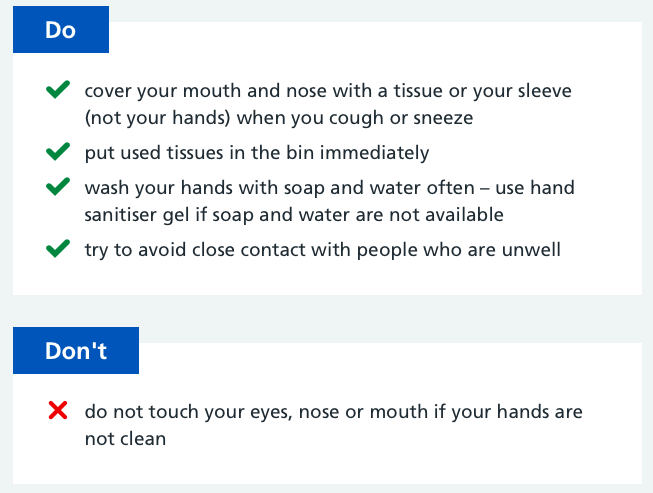
Minimise risk
Whilst you are out working in property make sure you have hand sanitiser with you and use it before entering and after leaving the property.
Avoid touching any surfaces in the property (where possible whilst not risking your safety) to minimise potential transference either to you or from you.
Wear disposable gloves but don’t leave them in the property; dispose them safely.
When collecting and returning keys again use hand sanitizer and where possible wash your hands as soon as you can.
Current advice is to wash for 20 seconds or as long as it takes to sing ‘Happy Birthday’ in your head twice and wash your hands from the wrist downwards to ensure that they are clean.
Working inside properties and interacting with residents
Property visits are a particular area of concern to both clerks and tenants as the close proximity of both parties whilst carrying out the report is inevitable.
Current Government and NHS advice is that you only need to stay away from public places (self-isolate) if you have a continuous cough or fever, or if advised to by the NHS 111 online coronavirus service or a medical professional (correct at time of publishing – 13th March 2020)
So what should you do when conducting a report?
We feel that a sensible approach to the situation should be to politely ask, when booking or reconfirming the appointment with the resident/key-holder, if they have travelled to or recently returned from somewhere with the higher risk of coronavirus, if they have known contact with someone with the virus or if they present with any symptoms.
These places currently are:
- Cambodia
- China
- Hong Kong
- Iran
- Italy
- Japan
- Laos
- Macau
- Malaysia
- Myanmar (Burma)
- Singapore
- South Korea
- Taiwan
- Tenerife – only the H10 Costa Adeje Palace Hotel
- Thailand
- Vietnam
NB: correct as of 13th March 2020
Explain to the tenant/key-holder that you wish to respect their privacy, but have a duty of care to both them, yourself and your clerks to check (if booking on their behalf).
You may also deem it sensible to ask if anyone in the household is unwell and then make a decision as to whether to rearrange the appointment.
Again; you should respect the privacy of the tenant so it is essential to take a measured approach and be aware that they are in no way obliged to provide you with their medical history.
Remember; the tenant is likely to be just as concerned as you are about the current crisis. If you are feeling unwell, consider whether it is advisable to attend the appointment. What are the risks involved in passing on your cold or illness? This is the tenants home and they will want to ensure they are not exposed unnecessarily.
Whilst at the property; we would advise that you use hand sanitiser before you enter to reassure the tenant that you are taking their well-being seriously. You could wear gloves and N95 Mask if you prefer, but dispose of them carefully and do not leave them at the property. Do not put these into general waste for 72 hours.
Ask that the tenant leads the viewing by opening doors to rooms and areas. Remember that an interim property visit is a non-invasive report so you should already be respecting the tenants’ items and personal belongings. A full inventory, check-in or check-out will differ.
Touch as little surfaces, handles and places where viruses could transfer as possible.
After the conclusion of the visit again use hand sanitiser before returning to your vehicle, home or office to minimise any transference. Dispose of any personal protection equipment (PPE) into a plastic bag, tie this up and dispose of safely.
Plan ahead
If you are working with clerks you should be planning for the potential of your employed or self-employed clerks being off sick, self-isolating and or even refusing to come to work due to perceived risk. You can check sick pay regulations and advice here: Employment Support Allowance
Keep all your staff and contractors informed and ensure that they are aware of all the available advice and constantly revisit that advice yourself as to changes in guidance or risk level.
Talk to your clients about their own protocols especially if conducting reports where tenants are usually present and agree on how you will jointly manage your reporting needs.
InventoryBase Workstreams enables clerks to seek additional work should they require it and are well/presenting no symptoms – and in turn, offers a service to agents/inventory providers seeking clerks to carry out reports should their staff be unavailable, unwell or have symptoms.
Outsource or bid on property reports via InventoryBase Workstreams.
Government guidance for employees, employers and businesses
The Chancellor has set out a package of temporary, timely and targeted measures to support public services, people and businesses through this period of disruption caused by COVID-19.
This includes a package of measures to support businesses including:
- a statutory sick pay relief package for SMEs
- a Business Rate Relief for small businesses and pubs
- small business grant funding of £3,000 for all business in receipt of Small Business Rates Relief (SBRR) and Rural Rates Relief
- the Coronavirus Business Interruption Loan Scheme to support long-term viable businesses who may need to respond to cash-flow pressures by seeking additional finance
- the HMRC Time To Pay Scheme
For more information: Covid-19 Guidance for employers
Make measured & sensible decisions
A sensible and measured approach to your activities as an inventory clerk is the professional approach to take during this unprecedented crisis and InventoryBase and InventoryBase Academy will continue to monitor and respond to the situation here in the UK and offer our support to all inventory professionals.
If you are at all unsure about your health then contact NHS 111 direct and do not attend your doctors or A&E before calling them if you have any symptoms or concerns.
LATEST ADVICE AS OF 13TH MARCH
Self Isolate
Stay at home for 7 days if you have either:
- a high temperature
- a new, continuous cough
Use the NHS 111 online coronavirus service if:
- you feel you cannot cope with your symptoms at home
- your condition gets worse
- your symptoms do not get better after 7 days
In Scotland call your GP or NHS 24 on 111 out of hours.
In Wales call 111 (if available in your area) or 0845 46 47.
In Northern Ireland call 111.
If you are worried or concerned about workloads – InventoryBase Workstreams are assisting letting agents and inventory providers across the country by being able to provide clerks to carry out reports within local areas. Should you or a staff member present symptoms, register with InventoryBase Workstreams to find additional clerks in your area who aren’t presenting symptoms and are well to continue working.
If you are well and are able to provide assistance, or should you require help in conducting reports/visits – register for InventoryBase Workstreams here.